
Reviewed · GRAN CANARIA
Gran Canaria historical house with mango plantation
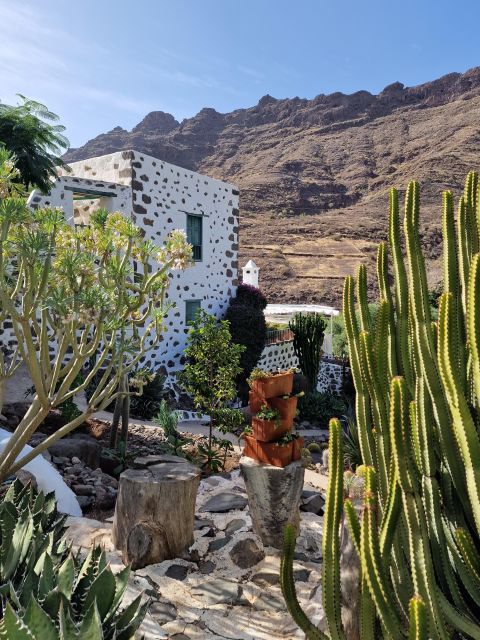
Gran Canaria’s 200-year-old Canarian farmhouse is the star here, not a grand museum with ropes and labels, but a restored group of humble buildings set above the Mogán Valley. You walk among traditional structures, native plants, cactus paths, fruit trees, and wide valley views before finishing with local vermouth and a mango dessert.
I like the way the visit connects architecture with farming. I also like the small-group setup, limited to 10 people, which gives guides such as Katarina and Tatiana room to explain the house, plants, and food without rushing. The main caution is the route down to the mango plantation, which is not suitable for people with mobility impairments or baby carriages.
In This Review
- Key points to know before booking
- A quiet look at Gran Canaria’s traditional farm life
- Walking through the 200-year-old Canarian farmhouse
- Cactus paths and plants shaped by a dry climate
- Seeing mangoes, avocados, and soursops growing
- Gran Canaria’s first farm-made vermouth
- The mango dessert worth remembering
- What the two-hour schedule feels like
- Is $63 a fair price?
- Who will enjoy this Mogán experience most?
- Practical booking advice for the farmhouse and tasting
- Should you book this Gran Canaria farmhouse tour?
- FAQ
- How long does the Gran Canaria farmhouse experience last?
- Where does the tour begin?
- Where does the activity finish?
- Is hotel pickup included?
- Which languages are available?
- What drinks and food are included?
- Is the tour suitable for wheelchair users or people with mobility issues?
- Can I add lunch or dinner?
Key points to know before booking
- A restored farmhouse with several small buildings gives you a close look at popular Canarian architecture.
- The cactus garden adds an easy, picturesque walk among a wide range of plants.
- Mangoes, avocados, and soursops are explained in the setting where they grow.
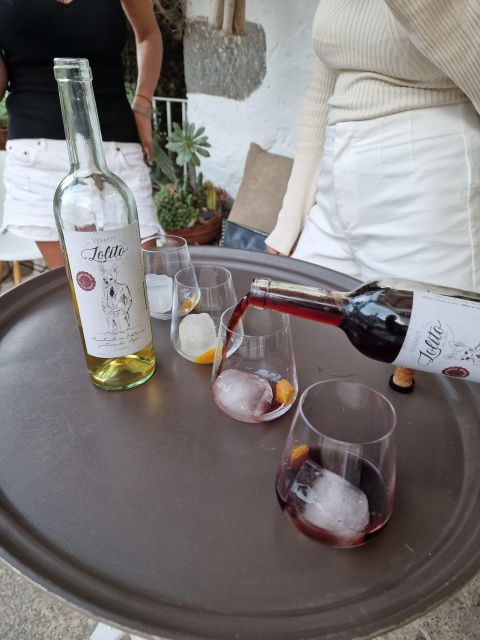
- Lolito vermouth is made on the farm, with both red and white versions included in the tasting.
- Gazpachuelo de mango, a cold mango and yogurt soup with chocolate cubes, finishes the food tasting.
- The $63 price makes the most sense if you value a private-feeling guide, tastings, and a farm visit rather than a long sightseeing tour.
A quiet look at Gran Canaria’s traditional farm life
This experience gives you a different view of Gran Canaria. Many visitors come for the beaches, resort promenades, and mountain roads, but this short visit focuses on the island’s older rural character.
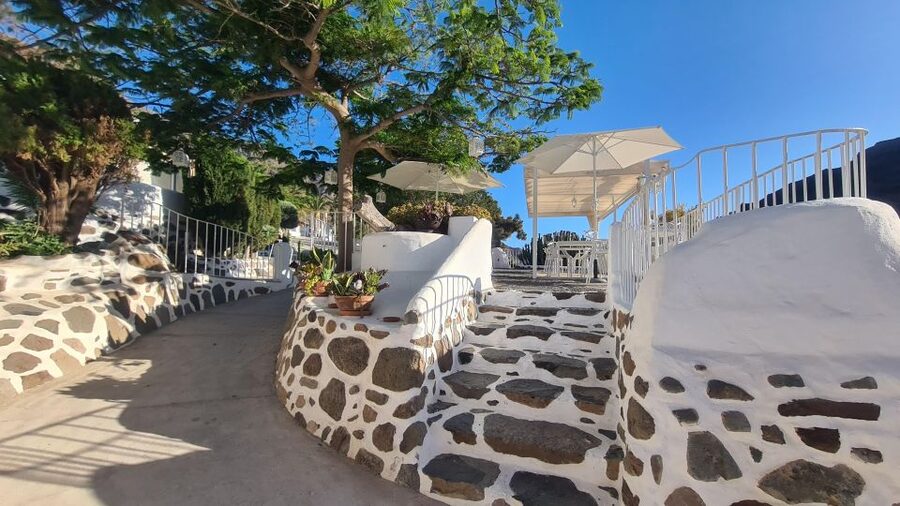
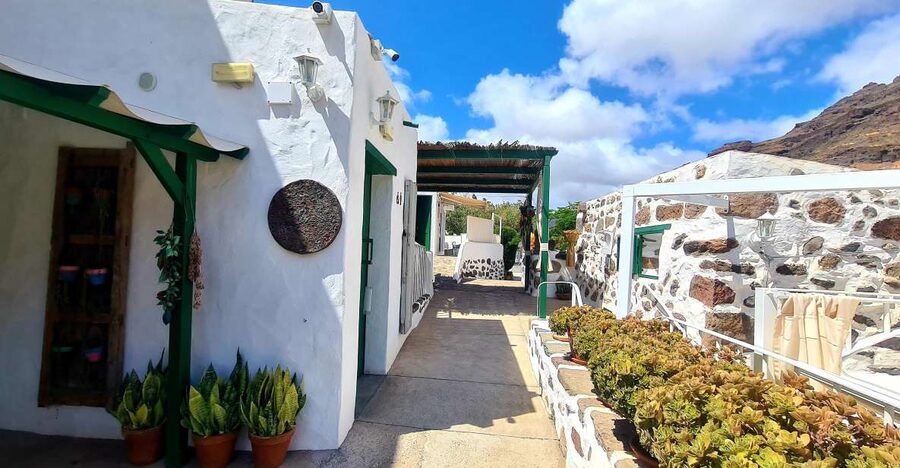
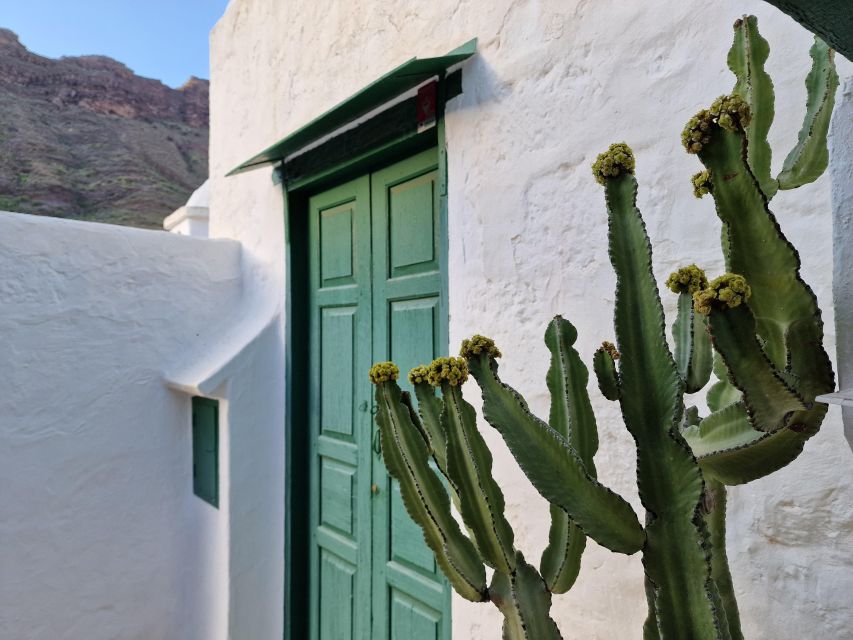
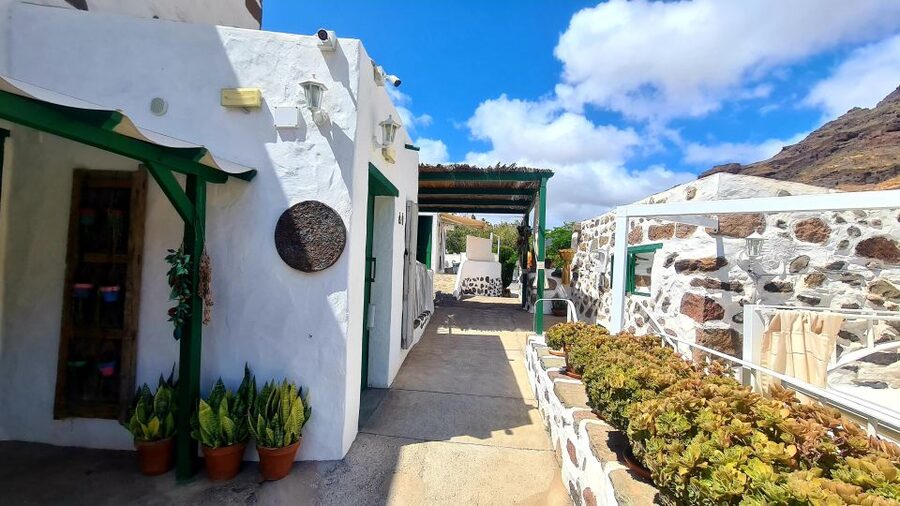
The farmhouse sits in the Pueblo de Mogán area. It is made up of several small buildings, restored according to the rules and forms of popular Canarian architecture. That matters because you are not simply looking at an old stone building. You are seeing a working style of local construction presented as a complete farm setting.
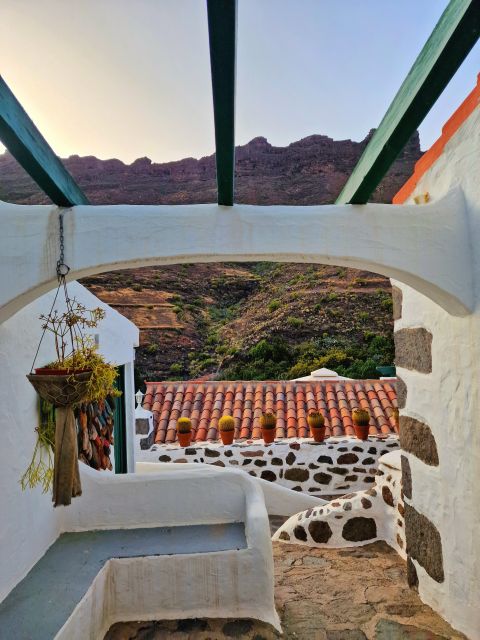
The surrounding native vegetation helps the visit feel tied to the valley. From the property, you get views across the Mogán Valley, and the setting gives the architecture some context. The house was built for practical life, and the gardens and plantations show how that life connected to the land.
Your guide leads the walk and explains the story of the property. English, Spanish, and Russian tours are available. Guides named Katarina and Tatiana are associated with the experience, and the personal side of the visit is one of its strongest features. Katarina is described as warm and welcoming, while Tatiana is praised for her friendly manner and clear explanations.
A few more Gran Canaria days out to weigh up
- Full-Day Tour Exploring History, Nature and Aloe Vera Farm
★ 4.5 · 40 reviews - Gran Canaria Historic Tour – Yestarday and Today Premium
★ 4.0 · 10 reviews
Walking through the 200-year-old Canarian farmhouse
The farmhouse is the first major stop and takes up most of the sightseeing portion of the tour. The full visit lasts about two hours, with roughly 75 minutes allocated to Mogán for the guided visit, views, photographs, plant viewing, and time around the historic property.
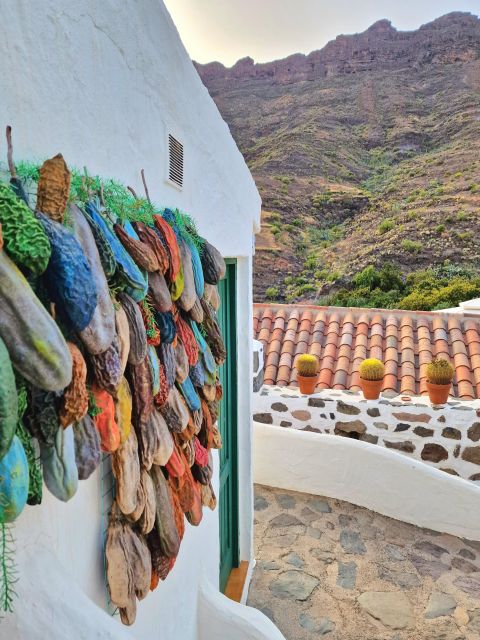
The buildings have been faithfully restored rather than turned into a polished modern attraction. That is good news if you like places with a sense of use and age. You can focus on the forms, materials, layout, and relationship between the buildings instead of expecting a large collection of formal exhibits.
The tour is guided, so you can ask about the house and the way Canarian families used similar rural properties. The supplied details do not list specific rooms or household objects, so it is best to think of this as an architectural and agricultural visit rather than a fully furnished house museum.
The views are part of the appeal. The property’s position above the valley gives you a chance to stop for photographs and take in the surrounding scenery. You are not spending the morning on a bus or moving between many towns. Instead, you stay in one area and give the place time to explain itself.
That slower pace suits anyone who enjoys local buildings and plant life. If you want a packed tour with several major monuments, this may feel too focused. At $63 per person, the price is tied to the small-group guide and tasting experience, not to a large number of attractions.
Cactus paths and plants shaped by a dry climate
The cactus garden adds variety to the farmhouse visit. You follow picturesque trails among a broad range of cactus and other plants, giving you an easy way to explore the grounds between the architecture and plantation sections.
This is not presented as a specialist botanical tour, so you should not expect a full plant catalogue. The value is visual and practical. The garden helps you see how decorative plants and useful crops fit into a dry island setting, and it creates some of the most pleasant opportunities for photographs.
The paths are also a useful change of pace. After listening to the farmhouse story, you can walk through the garden and look closely at the shapes and sizes of the plants. Wear comfortable shoes, since the experience includes outdoor paths and a route down toward the mango plantation.
The provider specifically warns that the way down to the mango plantation is not suitable for people with mobility impairments or baby carriages. The activity is described as wheelchair accessible in its general information, but that statement conflicts with the warning about the plantation route. If you use a wheelchair, have difficulty walking, or need a stroller, ask the provider exactly which parts can be reached safely before paying.
Seeing mangoes, avocados, and soursops growing
The plantation section gives the tour its strongest connection to everyday Canarian food. You see mangoes, avocados, and soursops growing on the farm, then hear how the fruit is used in local cooking.
This part is more useful than simply sampling finished products. You can connect the fruit on the tree with the dishes and drinks served later. Mango is especially important here because it appears in the dessert and forms part of the farm’s food identity.
Cactus, known locally as tunera, is also discussed. The guide explains how it is used in Canarian cuisine, adding a practical detail that you may not get from a standard sightseeing tour. You are learning about food in the place where plants are grown, not only hearing a list of local ingredients in a restaurant.
The descent to the plantation is the main physical issue on the tour. The supplied information also says the activity is not suitable for people with heart problems, high blood pressure, or people over 95 years of age. Those restrictions may be important for anyone planning the visit around a family group.
No hotel pickup or drop-off is included. You need to reach the meeting point at the parking area of Valle de Mogán restaurant, at Los Pasitos 2, in the Pueblo de Mogán area. At the end, you return to the same meeting point.
Same island, a completely different sort of day:
- Poema del Mar Skip-the-Line Ticket
★ 4.8 · 3,856 reviews - Puerto de Mogán: Submarine Tour
★ 4.4 · 3,792 reviews - Maspalomas: Guided Camel Ride in the Maspalomas Sand Dunes
★ 4.4 · 3,690 reviews - Guided tour of the Banana World
★ 5.0 · 3,431 reviews
Gran Canaria’s first farm-made vermouth
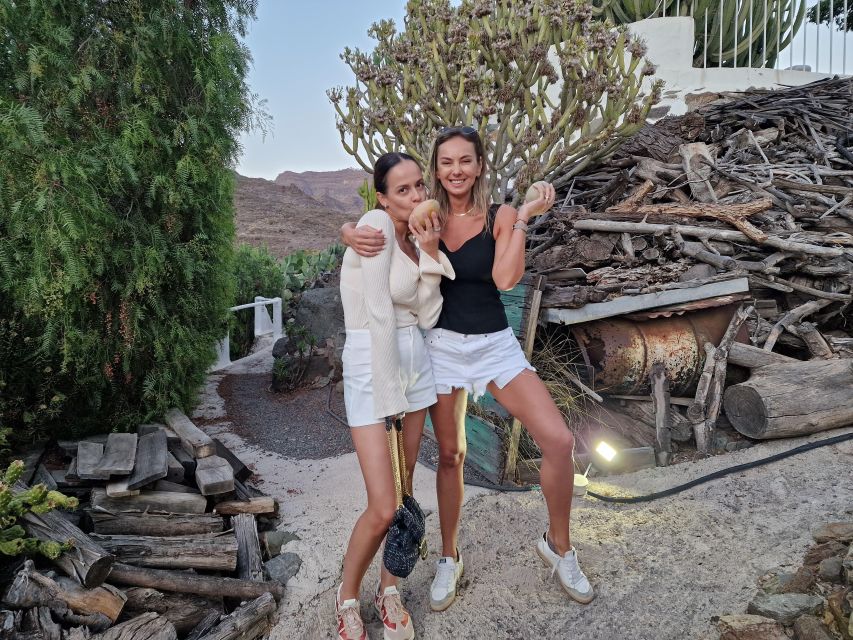
After the house and plantation, you visit the vermouth production area for about 30 minutes. The farm makes Lolito, described as the first vermouth produced in Gran Canaria.
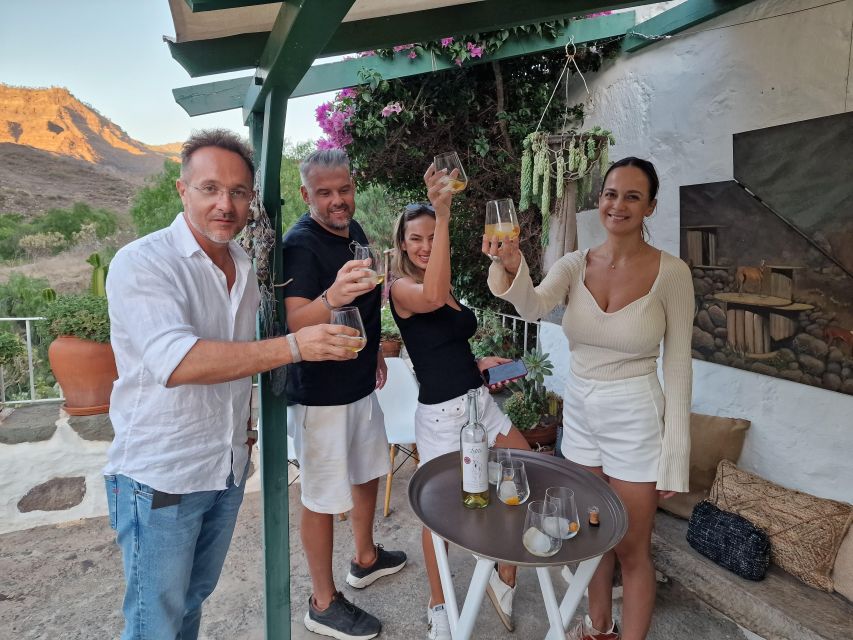
You taste both the red and white versions. This is a compact tasting rather than a full winery circuit, but it gives the visit a clear local finish. Vermouth is also a good choice for a farm tour because it brings together plants, flavor, and island production in one glass.
The tasting is included in the $63 price, along with water and the mango dessert. That makes the cost easier to justify for people who want a guided cultural visit with food and drink built in. If you are mainly interested in seeing the farmhouse and do not drink alcohol, the value is less obvious, though a non-alcoholic drink may be possible.
One useful detail is that a special non-alcoholic drink was prepared for a 13-year-old participant. This is not advertised as a guaranteed part of every booking, so you should request it in advance if someone in your group does not drink alcohol. Still, it shows that the host can pay attention to individual needs when notified.
The tasting is not designed as a large meal. You get drinks and dessert, but lunch or dinner costs extra. Keep that distinction in mind when comparing this experience with a food tour.
The mango dessert worth remembering
The included dessert is called Gazpachuelo de mango. It is a cold mango and yogurt soup with chocolate cubes.
The name may sound unusual if you expect a standard pastry or ice cream. The dish is built around the fruit grown at the farm, so it works as a final link between the plantation visit and the tasting table. The cold texture should also suit Gran Canaria’s warm climate, though the tour information does not specify the exact serving size.
The dessert gives non-drinkers something substantial to enjoy during the final stop. It also makes the experience more than a simple vermouth sample. You are tasting two versions of the farm’s drink and a distinct mango-based dish.
If you want a larger meal, you can add lunch or dinner at Valle de Mogán restaurant. The optional meal features local dishes made with fresh ingredients, but it is not included in the standard package. I would treat the restaurant meal as a separate decision, not a reason to assume the $63 covers a full culinary outing.
What the two-hour schedule feels like
The timing is compact and fairly easy to fit into a day around Mogán. The main visit lasts about 75 minutes, followed by around 30 minutes at the vermouth production area, with the remaining time allowing for meeting, movement, and the return to the parking area.
That two-hour length is a real advantage if you are arranging other plans. You get a cultural stop without committing half a day. At the same time, the short schedule means you should not expect a long workshop, an extensive plantation walk, or a full meal.
The group is limited to 10 participants. That is small enough for direct questions and a more personal pace, especially in the historic buildings and tasting area. A private guide is included, though the activity is described as a small group rather than a private booking for only your party.
The meeting point is important. There is no hotel transportation, so build in enough time to reach Valle de Mogán restaurant parking. Look for the guide wearing a black jacket. The activity finishes where it begins, which keeps the arrangement simple if you are driving or already spending time in the area.
Starting times vary, so check availability before planning the rest of your day. The duration is fixed at two hours, but the exact start time depends on the date.
Is $63 a fair price?
At $63 per person, this is not the cheapest short attraction in Gran Canaria. The price is fair for the right kind of visitor: someone who wants a guided look at a restored rural property, a cactus garden, a fruit plantation, and a local vermouth tasting in a small group.
You are paying for several connected elements rather than one major sight. The guide, water, red and white Lolito vermouth, and Gazpachuelo de mango are included. The experience also offers a setting that would be difficult to understand from a resort restaurant alone.
The cost is less attractive if you only want a drink tasting or a quick garden visit. It is also not a substitute for lunch, since the meal at Valle de Mogán restaurant is optional and costs extra.
I would compare it with the price of a standard winery visit, then ask what kind of day you want. This tour adds Canarian architecture, the cactus garden, and a working fruit plantation. Its value comes from the combination and the guide’s explanations.
Who will enjoy this Mogán experience most?
I would recommend it to people who enjoy local food, rural architecture, plants, and small cultural visits. It suits couples, small families, and anyone staying in or near the Mogán area who wants a break from the usual beach routine.
It is also a good choice for visitors who prefer a short, guided experience with a clear beginning and end. The English, Spanish, and Russian language options make it useful for mixed-language groups, provided you select the right language when booking.
Families should note the age and mobility restrictions. A special non-alcoholic drink may be arranged for a child, but the plantation route is not suitable for baby carriages. The activity is also not recommended for people with heart problems, high blood pressure, mobility impairments, or those over 95.
The visit is less suitable for someone seeking a full-day food tour, a large wine estate, or a major museum. It is focused, local, and short. That is its strength, but also its limit.
Practical booking advice for the farmhouse and tasting
The meeting point is the parking area of Valle de Mogán restaurant, Los Pasitos 2. The guide wears a black jacket, and the tour ends at the same location.
The standard experience includes:
- A private guide within the small-group setting
- Water
- A visit to the historic farmhouse and grounds
- Cactus garden paths
- Fruit plantation visit
- Red and white Lolito vermouth tasting
- Gazpachuelo de mango dessert
Lunch and dinner are not included. If you want the optional restaurant meal, confirm the extra cost and timing when you book.
Free cancellation is available up to 24 hours before the activity for a full refund. You can also reserve and pay later, which helps if you are still arranging your Gran Canaria schedule.
Should you book this Gran Canaria farmhouse tour?
Book it if you want a personal look at rural Gran Canaria, especially if the idea of a restored farmhouse, cactus garden, fruit trees, and locally made vermouth appeals to you. The guide’s warm approach, the unusual mango dessert, and the chance to taste both red and white vermouth give the two-hour visit a clear character.
Skip it if you need step-free access throughout, want hotel pickup, or expect a full lunch to be included. For everyone else, the best reason to book is the combination: architecture, agriculture, and food in one compact visit to the Mogán Valley.
FAQ
How long does the Gran Canaria farmhouse experience last?
The activity lasts two hours. The Mogán visit takes about 75 minutes, and the vermouth production and tasting stop takes about 30 minutes.
Where does the tour begin?
It begins at the parking area of Valle de Mogán restaurant, at Los Pasitos 2, in the Pueblo de Mogán area.
Where does the activity finish?
The activity ends back at the same meeting point at Valle de Mogán restaurant.
Is hotel pickup included?
No. Hotel pickup and drop-off are not included, so you must make your own way to the meeting point.
Which languages are available?
The live tour guide can conduct the experience in English, Spanish, or Russian.
What drinks and food are included?
The standard package includes water, red and white Lolito vermouth, and Gazpachuelo de mango, a cold mango and yogurt soup with chocolate cubes.
Is the tour suitable for wheelchair users or people with mobility issues?
The general information describes the activity as wheelchair accessible, but the route down to the mango plantation is not suitable for people with mobility impairments or baby carriages. Contact the provider before booking to confirm which areas can be reached.
Can I add lunch or dinner?
Yes. An optional lunch or dinner at Valle de Mogán restaurant can be added, but it is not included in the standard price.
Just added around Gran Canaria
- Las Palmas Maspalomas Gran Canaria Salsa Lovers Dance Experience★ 5.0 · 3 reviews
- Escape room “The gratest show on earth” at Holidayworld★ 3.9 · 3 reviews
- Gran Canaria: tasting wine & local cheese★ 4.7 · 3 reviews
- Parasail in Taurito Mogán or Playa del Inglés★ 4.5 · 3 reviews
- Photoshooting at Roque Nublo, Tejeda★ 5.0 · 3 reviews
- Gran Canaria Private Transfer from Puerto Rico to Las Palmas (LPA) airport★ 4.5 · 3 reviews
- Gastronomic Bike Tour through Las Palmas at Night★ 5.0 · 3 reviews
- E-Bike Family Tour : Sightseeing in Playa Ingles,Maspalomas Dunes★ 5.0 · 3 reviews