
Reviewed · GRAN CANARIA SCUBA DIVING
PADI Rescue Diver Course in Gran Canaria
The serious work here is learning how to help someone who is frightened, exhausted, unresponsive, or unconscious underwater and at the surface. This is not a sightseeing trip with a certificate tacked on. It is a practical PADI Rescue Diver course for certified Open Water divers, taught over two days around Amadores.
I like the small maximum of six people, which gives your instructor room to watch your technique and correct mistakes. I also like that the course includes PADI materials, certification fees, insurance, and hotel pickup from selected hotels, so the $397.58 price covers more than the lessons alone.
The main consideration is physical effort. You need moderate fitness, must complete a health questionnaire, and should not plan to fly within 48 hours after the course. Food and drinks are not included, and the pickup service is limited to selected hotels.
In This Review
- Key points to know before booking
- What this Rescue Diver course is really teaching
- Day one: building control in the bay or pool
- Day two: two rescue scenarios at Amadores Beach
- Why the small group and instructor support matter
- What the $397.58 price includes
- The practical safety details you should not skip
- Who will get the most from the course
- What may not suit every participant
- Should you book the PADI Rescue Diver course in Gran Canaria?
- FAQ
- Do I need a PADI Open Water certification?
- How long does the course last?
- Where does the first day take place?
- What time does the course start?
- Are hotel transfers included?
- Can I fly soon after the course?
Key points to know before booking
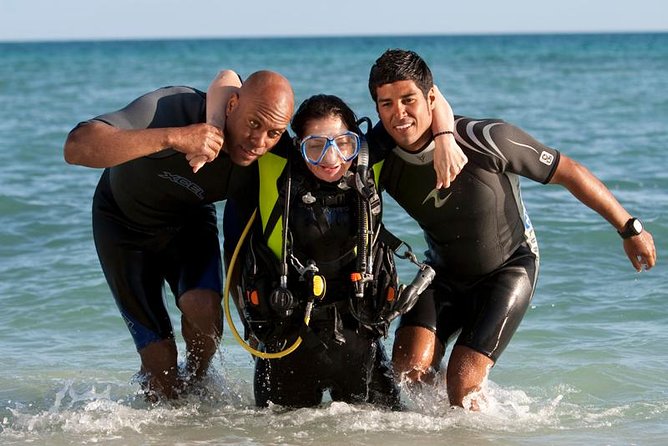
- Two practical training days: Learn rescue skills on day one, then complete two rescue scenarios at Amadores Beach on day two.
- Pool or bay practice: The first day may take place in the local Amadores Bay or at the on-site pool, depending on the training plan.
- Small group size: The course accepts a maximum of six participants, a useful limit for hands-on instruction.
- Open Water certification required: You must show proof of your existing dive certification before taking part.
- Chris and Kate are part of the team: Chris has taught the Rescue course, while Kate handles customer communication and course arrangements.
- Hotel transfers are selective: Pickup and return are available from certain Gran Canaria hotels, not necessarily every address.
What this Rescue Diver course is really teaching
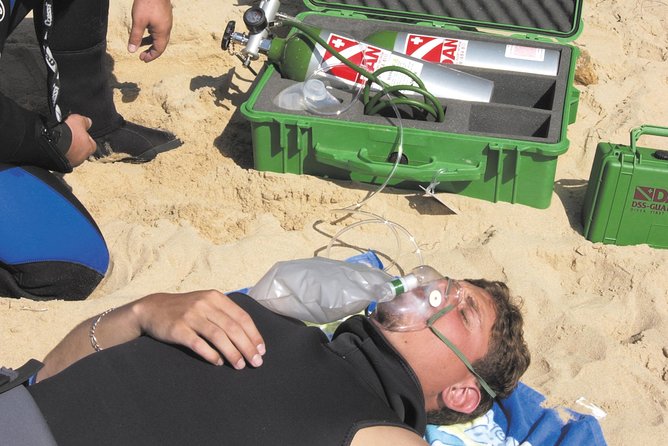
A Rescue Diver course changes the way you think underwater. Open Water training teaches you to manage your own equipment, buoyancy, air supply, and basic safety. Rescue training asks you to notice trouble in another person and act without becoming a second casualty.
That distinction matters. A panicked diver can move unpredictably. An unconscious diver may need help below the surface and again after reaching the shore or boat. You learn how to manage these situations while protecting yourself, controlling your breathing, and using clear emergency procedures.
The course covers self-rescue first. That is the right order. Before you assist someone else, you need to know how to recognize your own stress, deal with a problem, and regain control. You then work on assisting divers who are unresponsive or unconscious, both underwater and at the surface.
I like the focus because it gives the certification practical weight. You are not simply watching an instructor demonstrate a technique and then signing a form. You are expected to repeat the actions in a controlled setting and apply them during simulated emergencies.
The course is for people who already hold a PADI Open Water certification. You need to bring evidence of that certification, and every participant must complete a medical questionnaire before entering the water. Conditions such as asthma or heart problems may prevent you from scuba training, so consult a doctor if you are unsure.
More Gran Canaria dive trips:
- Scuba Diving Experience for Beginners in Gran Canaria
★ 5.0 · 561 reviews - Gran Canaria: Try Scuba Diving for Beginners
★ 4.9 · 403 reviews - Beginners Scuba Diving Experience in Gran Canaria
★ 5.0 · 254 reviews
Day one: building control in the bay or pool
The first day is devoted to teaching and practicing the rescue skills. Training may take place in the local bay at Amadores or in the on-site pool. That flexibility is useful because an instructor can choose a setting suited to the skills being introduced and the conditions on the day.
A pool offers a controlled place to learn the mechanics. You can concentrate on positioning, communication, equipment use, and the sequence of an emergency response without the added distraction of a larger open-water setting.
The bay gives you a more natural setting. You are working in the same broad coastal environment where you will later complete the practical scenarios, but the skills can still be introduced in a structured way. The shift between pool and bay also helps show that rescue work is not just a set of neat pool exercises.
Expect instruction on self-rescue and on dealing with an unresponsive or unconscious diver. The supplied details do not list each individual exercise, so you should ask Blue Water Diving for the precise training schedule if you want to know the exact order of skills before booking.
The small group limit is especially useful on this day. With no more than six participants, your instructor has a better chance of seeing how you respond, rather than simply explaining a procedure and moving on. Rescue skills depend on timing and body position, so personal correction has real value.
The course team has a strong training focus. Chris is identified as an instructor who taught a Rescue course in a professional, friendly way, and the wider team includes Kate, who manages course communication and logistics. That combination matters when you are fitting a two-day certification into a holiday schedule.
Day two: two rescue scenarios at Amadores Beach
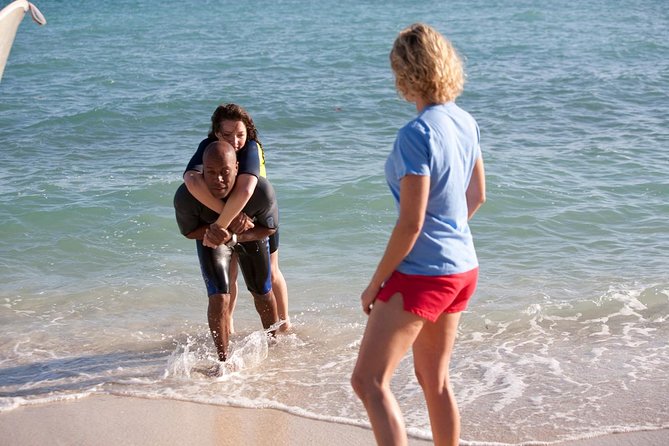
The second day moves to Amadores Beach, where you complete two Rescue scenarios. This is the point where the separate skills have to work together.
A scenario is more demanding than practicing one action at a time. You need to identify the problem, choose a response, assist the person, and stay aware of your own safety. The setting at Amadores gives the final assessment a clear sense of place, rather than leaving the whole course inside a classroom or pool.
The two scenarios also give you a chance to improve after the first attempt. If your first response is rushed or your communication is unclear, the instructor can help you adjust before the second exercise. That repetition is one of the best reasons to take the full course instead of trying to learn rescue theory on your own.
You should expect to work hard. The course is aimed at divers with a moderate level of physical fitness, and assisting another person in the water can be tiring. Comfortable basic swimming ability and confidence with your existing scuba skills will make the two days less stressful.
Amadores Beach is also a practical location for a holiday course. It is on Gran Canaria’s west coast and forms part of the Puerto Rico area logistics, so you are not spending the whole experience traveling across the island to reach a remote site.
Why the small group and instructor support matter
Rescue training can feel awkward at first. You are practicing emergencies, handling equipment, and responding to a person who may not move in a predictable way. That is exactly why the instructor’s attention matters.
A six-person maximum keeps the group from becoming a crowd. It should be easier to hear instructions, ask questions, and repeat a technique when needed. It also gives the instructor a better view of individual habits, such as rushing, losing contact with a simulated casualty, or forgetting self-protection.
The course team’s background supports a serious training atmosphere. Chris has taught the Rescue course, and the center also provides longer training paths, including Emergency First Response and Divemaster preparation. You do not need to continue into those qualifications, but the wider training structure suggests that Rescue is treated as a real step in diver development.
The tone is not described as stern or military. Instead, the available information points to clear instruction, friendly communication, and a supportive approach. That is useful if you want firm safety guidance without feeling embarrassed when a technique takes several attempts.
Same island, a completely different sort of day:
- Poema del Mar Skip-the-Line Ticket
★ 4.8 · 3,856 reviews - Puerto de Mogán: Submarine Tour
★ 4.4 · 3,792 reviews - Maspalomas: Guided Camel Ride in the Maspalomas Sand Dunes
★ 4.4 · 3,690 reviews - Guided tour of the Banana World
★ 5.0 · 3,431 reviews
What the $397.58 price includes
At $397.58 per person, this is not a cheap add-on activity. It is a professional certification course, and the price includes several costs that can otherwise appear separately.
You receive:
- Professional instruction
- Required PADI materials
- Certification fees
- Insurance
- Hotel pickup and return from selected hotels
That package improves the value. You are paying for two days of training, course materials, assessment, and certification rather than just water time. Hotel transportation can also save you the trouble of arranging a taxi or public transport, though you need to confirm that your hotel qualifies.
Food and drinks are not included. Plan to bring or buy your own refreshments, especially because the course involves physical work. The meeting point is listed at the Euronet ATM at Manixa, C. Doreste y Molina 18, in Puerto Rico, with a 9:00 am start. The activity ends back at the meeting point.
The mobile ticket is handy for keeping your booking details on your phone. Confirmation is sent at booking, which helps when organizing a short holiday itinerary.
The practical safety details you should not skip
The 48-hour flying rule is important. Flying soon after scuba activity is not recommended, so do not schedule your return flight immediately after the course. You need to leave enough time between completing the training and taking to the air.
You must also provide proof of certification. This course is not a replacement for PADI Open Water training, and the operator requires evidence from everyone taking part in a certified scuba activity.
The health questionnaire is another serious step, not routine paperwork to rush through. Asthma, heart conditions, and other pre-existing medical issues can affect your ability to participate. If you have any concern, speak with a doctor before booking rather than waiting until the morning of the course.
Public transportation is nearby, but the selected-hotel pickup may be easier. Since the start point is in Puerto Rico and the water work is centered around Amadores, confirm the exact meeting arrangement with Blue Water Diving before your course day.
Free cancellation is available if you cancel at least 24 hours before the 9:00 am start time. Inside that window, the payment is not refunded, and late changes are not accepted. The cut-off uses local Gran Canaria time.
Who will get the most from the course
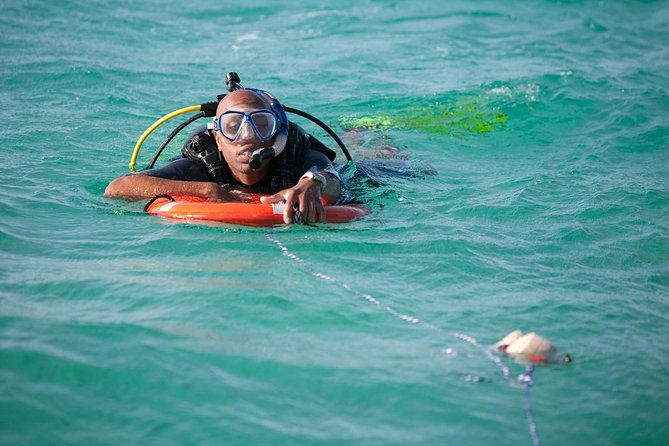
This is a good fit if you already have PADI Open Water certification and want to feel more capable when something goes wrong. It suits holidaymakers who want a meaningful qualification, rather than a single relaxed underwater outing.
It is also a sensible choice if you plan to continue your scuba education. Rescue is a natural step before more advanced training, and the Blue Water Diving team also works with people progressing toward Divemaster level.
You should be comfortable with two active days and willing to practice difficult situations more than once. If you are looking only for a gentle introduction to scuba, this is the wrong course. Open Water training comes first.
It may also suit returning customers who value continuity. The team has worked with divers progressing from Open Water to Advanced Open Water and Rescue, and Chris and Kate are familiar names within the center. That can make the process easier if you prefer one team for several qualifications.
What may not suit every participant
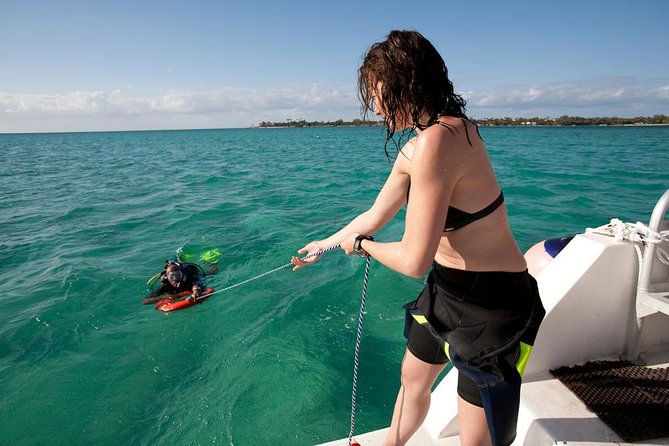
The course is short, but it is not light. Two days gives you an efficient route to the certification, yet it also means the schedule is focused. You will not have much spare time for a slow holiday pace between lessons.
The course description does not promise a particular marine-life encounter or list specific underwater sites. You should book this for the rescue education and coastal training, not for a wildlife-focused outing.
Hotel pickup is another possible limitation. It is offered only from selected hotels, so you may need to reach the Puerto Rico meeting point yourself. The nearby public transportation helps, but the exact convenience depends on where you are staying.
Finally, the price does not include meals. That is easy to manage, but remember it when comparing the total cost with other two-day activities.
Should you book the PADI Rescue Diver course in Gran Canaria?
Book it if you already hold PADI Open Water certification, want serious safety training, and can commit to two physically active days. The small group, practical Amadores scenarios, included PADI materials, certification fees, insurance, and hotel transfer make the $397.58 fee reasonable for a full course.
I would be especially comfortable choosing it if clear instruction and a friendly team matter to you. Chris has taught the Rescue course, while Kate is involved in organizing the experience, and the center supports further training beyond this qualification.
Skip it if you want a casual holiday activity, have not completed Open Water certification, or cannot leave 48 hours before flying. For the right participant, this is a useful qualification that can make every future scuba outing feel more controlled and responsible.
FAQ
Do I need a PADI Open Water certification?
Yes. You must already hold an Open Water certification and provide evidence of your dive certification before taking part.
How long does the course last?
The course takes approximately two days. Day one covers instruction and practice, while day two includes two Rescue scenarios at Amadores Beach.
Where does the first day take place?
The skills are taught either in the local bay at Amadores or in the on-site pool.
What time does the course start?
The listed start time is 9:00 am. The meeting point is at the Euronet ATM at Manixa, C. Doreste y Molina 18, Puerto Rico, Las Palmas, Spain.
Are hotel transfers included?
Hotel pickup and drop-off are included for selected hotels only. Confirm whether your accommodation is covered before booking.
Can I fly soon after the course?
Flying within 48 hours of scuba activity is not recommended. You must also complete a health questionnaire, and certain medical conditions may prevent participation.
Just added around Gran Canaria
- Gran Canaria: tasting wine & local cheese★ 4.7 · 3 reviews
- Las Palmas Maspalomas Gran Canaria Salsa Lovers Dance Experience★ 5.0 · 3 reviews
- Escape room “The gratest show on earth” at Holidayworld★ 3.9 · 3 reviews
- Parasail in Taurito Mogán or Playa del Inglés★ 4.5 · 3 reviews
- Photoshooting at Roque Nublo, Tejeda★ 5.0 · 3 reviews
- Gastronomic Bike Tour through Las Palmas at Night★ 5.0 · 3 reviews
- E-Bike Family Tour : Sightseeing in Playa Ingles,Maspalomas Dunes★ 5.0 · 3 reviews
- Gran Canaria Private Transfer from Puerto Rico to Las Palmas (LPA) airport★ 4.5 · 3 reviews
Gran Canaria Scuba Diving, compared.
Scuba Diving Experience for Beginners in Gran Canaria
Read our review →
Beginners Scuba Diving Experience in Gran Canaria
Read our review →
Live an Adventure and Learn to Dive with Expert
Read our review →
Browse the lists this tour appears in