
Reviewed · GRAN CANARIA WINE TASTINGS
Guided Tour at Ron Arehucas Distillery
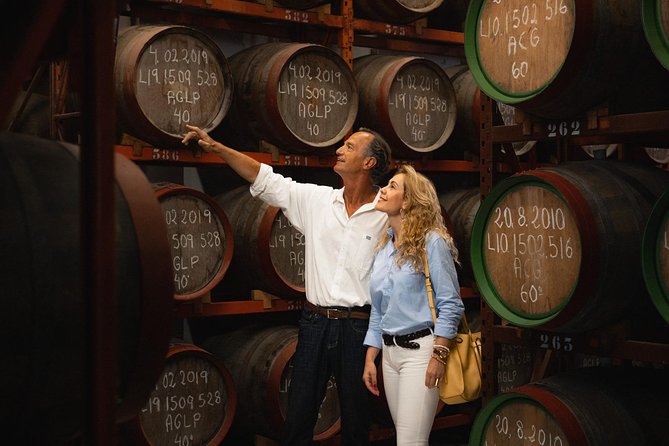
At Destilerías Arehucas, the most memorable sight is not a gleaming modern still but the old ageing cellar, packed with 4,308 American oak casks. The tour follows rum from its origins through fermentation, distillation, ageing, and bottling, then ends with a tasting that can include four or more pours, depending on the session.
I like the low price and the clear five-part route. I also like that this is a working distillery with a real sense of place in Arucas, rather than a generic tasting room. The main drawback is pace: a group of up to 30 people can make the explanations hard to hear, and some sessions move quickly through the production rooms.
In This Review
- Key points to know before you book
- What the Arehucas visit is really like
- Starting with the story of Arehucas
- The barrel cellar with 4,308 oak casks
- From mill to fermentation and distillation
- The bottling plant and the final production stage
- The tasting is the payoff
- Buying rum at the distillery shop
- Why Arucas makes the outing better
- Group size, sound, and the pace of the guide
- Who will enjoy this tour most
- Booking, tickets, and cancellations
- Is the $13.31 price good value?
- Should you book the Arehucas distillery tour?
- FAQ
- Where does the Arehucas distillery tour begin and end?
- How long does the tour last?
- Is the tour offered in English?
- How many people can join the tour?
- What will I see during the visit?
- Is rum tasting included?
- Can I cancel for a full refund?
Key points to know before you book
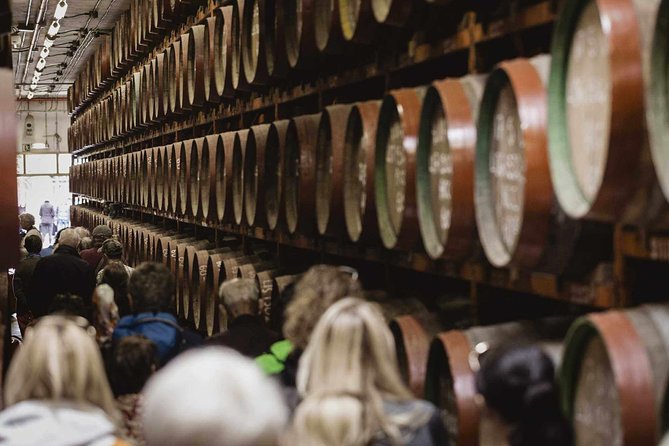
- The cellar is the star: See one of Europe’s oldest rum cellars, holding 4,308 American oak casks.
- The tasting is generous: Sample a selection of Arehucas rums and liqueurs, with some sessions offering more than four varieties.
- The tour takes about one hour: The production walk can feel shorter, with more time given to the final tasting.
- Arucas adds value: The distillery sits in the town of Arucas, which is worth pairing with the visit.
- Allow time for arrival: Parking is tight, and the nearby bus depot is not well signposted.
- Bring a paper ticket: Booking information refers to a mobile ticket, but the additional instructions say only paper tickets are accepted.
What the Arehucas visit is really like
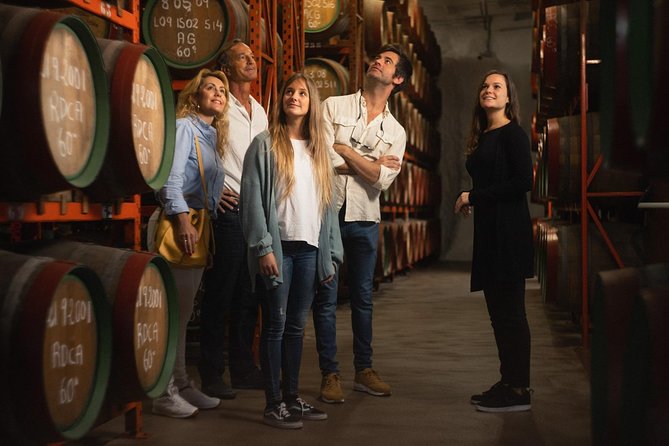
This is a compact factory tour with a tasting at the finish. You meet directly at Destilerías Arehucas, at Lugar Era de San Pedro, 2, in Arucas. There is no separate transfer or complicated meeting arrangement, which keeps the visit simple if you are already exploring northern Gran Canaria.
The tour lasts about an hour and follows five stages. You begin with the story of Arehucas, continue into the ageing cellar, then see the mill, fermentation and distillation rooms, the bottling plant, and finally the tasting area.
I would set your expectations correctly. This is not a long technical workshop or a slow spirits seminar. It gives you a useful introduction to Canarian rum, shows you the key parts of the facility, and finishes with a worthwhile sampling session at a modest price.
The guide speaks English for this version of the activity. Individual guides named in the feedback include Sofia and Elena, with Sofia receiving particular praise for explaining the process at an easy pace. Other sessions have included guides speaking Spanish or French, but you should book the English option if you want the tour presented in English.
More Gran Canaria wine tastings:
- Gran Canaria: Winery Tour, Wine Museum, and Tasting
★ 4.7 · 131 reviews - Banana Museum, Rum Distillery & Winery with Tasting: Premium tour
★ 4.5 · 62 reviews - 1h Boat Trip + 2h Dockside Local Wine & Food Tasting
★ 5.0 · 36 reviews
Starting with the story of Arehucas
The opening section explains how Arehucas began and places the distillery within the rum-making tradition of the Canary Islands. This is useful because it gives the equipment and storage rooms some context. You are not simply looking at tanks and barrels. You are following a local product from its origins to the bottle.
The introduction is also where the tour can vary most from one guide to another. Some guides explain the background clearly and invite questions. Other sessions have been described as more like a rehearsed presentation, with limited detail. A good guide can make this first stage feel lively, while a rushed guide leaves you wanting more information.
If you enjoy industrial history, food production, or local drinks, this opening should hold your attention. If your main interest is tasting, the first few minutes may feel like a delay before the more enjoyable part at the end.
The barrel cellar with 4,308 oak casks
The ageing cellar is the strongest visual part of the visit. It contains 4,308 American oak casks and is described as one of the oldest rum cellars in Europe. Rows of barrels give you a clear sense of the scale of the operation and help explain why ageing matters to the finished drink.
This is also the section where group size matters most. The rooms and passageways can be narrow and long, so not everyone can stand close to the guide. If you remain near the front, you will have a better chance of hearing the explanation and seeing what is being pointed out.
I would not expect a quiet, private look around the barrels. The tour is shared, and a maximum of 30 people can take part. Still, the cellar supplies the atmosphere that a small tasting bar cannot. The smell, the timber, and the rows of casks make the production process easier to picture.
Take a moment to look beyond the first row of barrels. The point is not just the number of casks. The cellar shows that rum is stored and developed over time, not simply mixed, bottled, and sent out immediately.
From mill to fermentation and distillation
The next stage covers the production process. You visit the mill, then the fermentation and distillation rooms. This is where the tour becomes most useful for anyone who wants to understand how rum is made rather than simply sample it.
The guide explains the movement from raw ingredients through fermentation and distillation. The supplied information does not promise that every machine will be operating during your visit. In fact, one account specifically notes that the process may be easier to understand in spring, when production is taking place.
That point is worth keeping in mind. A distillery can be interesting even when the machinery is quiet, but you may see less action than you imagine. The tour is about the facilities and the explanation of the process, not a guarantee of live production.
The pace can be brisk here. Some people appreciate moving steadily through the rooms, while others want time to study the machinery and think through each stage. If you are strongly interested in fermentation or distillation, stay close to the guide and ask questions when there is a pause.
A few more Gran Canaria days out to weigh up
- Maspalomas: Guided Camel Ride in the Maspalomas Sand Dunes
★ 4.4 · 3,690 reviews - Guided tour of the Banana World
★ 5.0 · 3,431 reviews - Gran Canaria Guided Buggy Tour
★ 4.7 · 1,743 reviews - Gran Canaria: Rural Villages Guided Sightseeing Tour
★ 4.6 · 544 reviews
The bottling plant and the final production stage
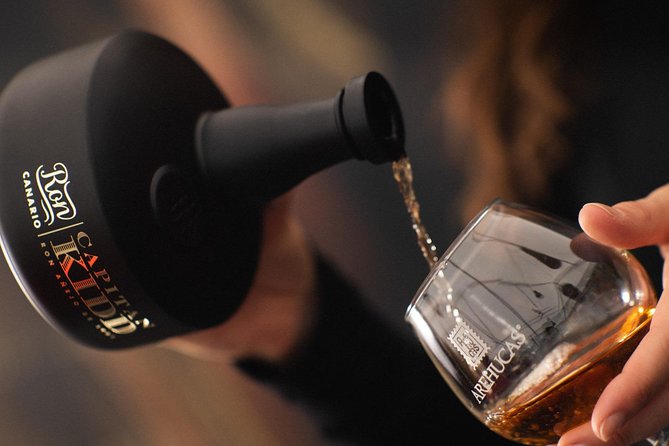
The bottling plant completes the practical story. After fermentation, distillation, and ageing, the rum must be prepared for sale, labelled, and packaged. Seeing this final stage helps connect the old casks in the cellar with the bottles you later find in the shop.
This part is more about orientation than detailed engineering. You will not receive an extended factory lesson, and the overall visit is designed to keep the group moving. I see that as a fair trade at this price, but it is also the reason I would not choose this tour if you want a specialist-level study of rum production.
For most people, the bottling plant works well as a bridge to the tasting. You have seen the main rooms and can now compare the finished products with the steps used to make them.
The tasting is the payoff
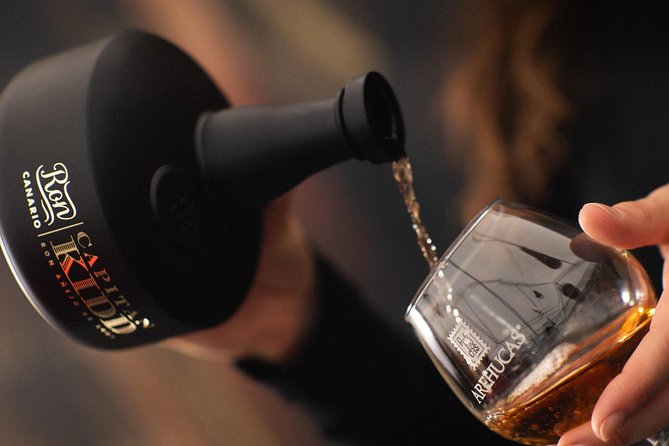
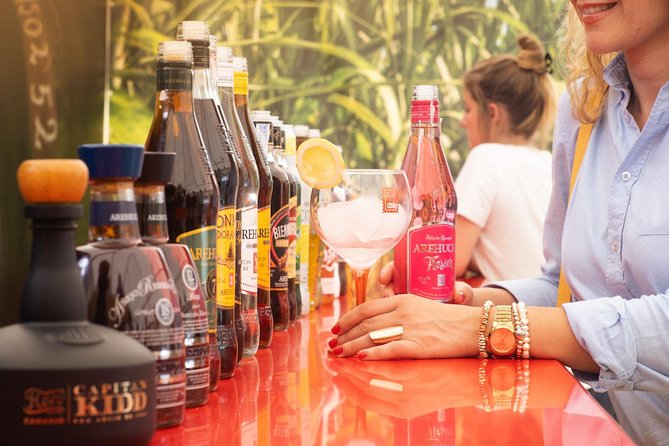
The tasting is the part most likely to determine whether this visit feels like good value. You sample a wide range of Arehucas rums and liqueurs after the tour. Sessions have included four pours per person, and one particularly generous tasting offered more than 10 different rums.
The exact number may vary, so I would not book expecting a fixed list. You might try several styles, including rum-based liqueurs and the popular ron miel, a honey rum. The tasting gives you a chance to compare flavours instead of judging the brand from one standard pour.
Some sessions move through the tasting quickly. If the group is large, you may have limited time to pause between samples, ask questions, or decide what you like best. That is the clearest weakness in an otherwise good-value visit.
The tasting can also be stronger than expected for the price. At the listed cost of $13.31 per person, an included selection of rums and liqueurs makes the activity inexpensive compared with many organised food and drink tours. You should eat beforehand, though. A flight of spirits on an empty stomach is a poor plan, particularly if you are also spending the day driving around Gran Canaria.
If you are driving, treat the tasting seriously and arrange your transport accordingly. The visit finishes back at the distillery, so you can buy products and then leave from the same place, but the activity does not include transport.
Buying rum at the distillery shop
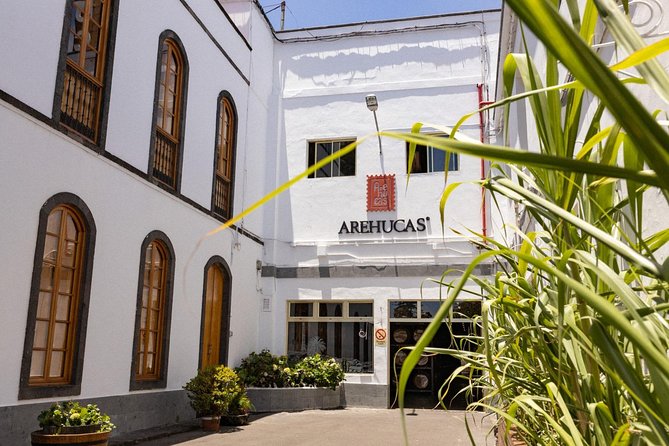
You can purchase Arehucas products at the end of the visit. The shop sells original distillery products, and the available range includes rum, liqueurs, and branded goods. The shop is a practical stop if you want to take home a bottle or a small souvenir without searching through several stores.
Prices have been described as reasonable, which improves the value of the visit. You can also use the tasting to decide what suits you before buying. That is more helpful than choosing a bottle based only on a label or a quick supermarket glance.
The shopping element does not overwhelm the tour, but it is clearly part of the commercial side of the experience. That is not a surprise at a distillery. Go in knowing that the visit ends with an opportunity to buy, and you will likely find the arrangement convenient rather than pushy.
Why Arucas makes the outing better
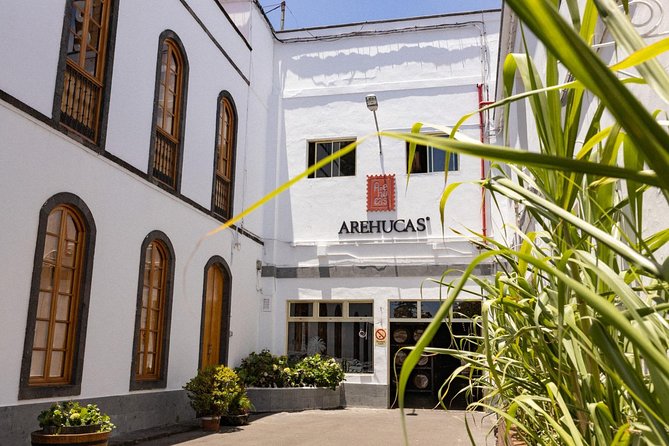
The distillery is in Arucas, and the town itself is worth adding to your plans. Several hours can easily become a half-day outing in the north of Gran Canaria if you combine the rum visit with time in town.
The tour alone is short. If you are already near Arucas, it fills an hour neatly. If you are crossing the island only for the distillery, the journey may feel too long for the length of the tour, especially if you are not interested in rum.
Public transportation is nearby, but the bus depot can be difficult to find after the visit. It is around the corner and not well signposted, so allow a little extra time rather than walking out of the gate and expecting an obvious stop. By car, parking can be tight, so do not arrive at the last minute.
The meeting and ending point are the same, which is helpful. You do not need to arrange a second pickup location or find your way to another part of town after the tasting.
Group size, sound, and the pace of the guide
The maximum group size is 30 people. That is manageable in open areas, but the cellar and other narrow rooms can feel crowded. The farther you stand from the guide, the more likely you are to miss details.
This is where guide quality matters. Sofia has been praised for speaking clearly and allowing time for photographs and questions. Elena has also been singled out for making the visit enjoyable. Other sessions have been less engaging, with the information delivered too quickly or with little development.
I would arrive ready to walk near the front. That simple choice improves the experience. You will hear more, see more, and have a better chance of following the production story in the correct order.
The advertised duration is approximately one hour. In practice, the guided walk may take only 30 to 40 minutes, followed by the tasting. That is not necessarily a problem, but you should understand what you are buying. The tour is short and focused, not an afternoon spent among the barrels.
Who will enjoy this tour most
I would recommend the Arehucas visit to:
- People curious about how rum is produced
- Anyone who enjoys local food and drink
- Rum fans who want to compare several Arehucas products
- Visitors already planning to see Arucas
- Budget-conscious visitors looking for an inexpensive activity away from the beach
- Couples or small groups who can share the tasting and then explore the town
It is less suitable if you want a private tour, detailed technical instruction, or plenty of quiet time around the machinery. It may also disappoint you if you expect to see every part of the production process in operation.
The tasting makes this a better choice for rum drinkers than for someone with no interest in spirits. Still, the historical and industrial parts give non-experts enough to follow, and the one-hour length keeps the commitment small.
Booking, tickets, and cancellations
Confirmation is provided at booking, and the experience is offered in English. The instructions contain a ticket detail worth checking: the summary refers to a mobile ticket, while the additional information says only a paper ticket is accepted. I would print the ticket before leaving for the distillery rather than rely on your phone.
Most people can participate, and the activity is near public transportation. The group limit is 30 people. Because the attraction can fill in advance, booking around 12 days ahead is a sensible choice if your schedule is fixed.
Free cancellation is available up to 24 hours before the start time for a full refund. Changes or cancellations inside that 24-hour window are not accepted for a refund. The local time at the distillery controls the cut-off.
The activity can also be canceled if the minimum number of participants is not met or if weather prevents the visit. In those cases, you are offered another date or experience, or a full refund.
Is the $13.31 price good value?
Yes, provided you view it as a short introduction with tasting rather than a full distillery course. The price includes the guided visit, access to the production areas, the historic cellar, and samples of multiple rums and liqueurs.
The tasting alone gives the ticket useful value, especially when several varieties are poured. The chance to compare products before buying adds another practical benefit.
The lower price also explains some limitations. You should not expect a private guide, a long technical presentation, or unlimited time in each room. Large groups and a brisk schedule are part of the bargain.
For a visitor already in Arucas, this is an easy yes. For someone making a special journey across Gran Canaria, I would pair it with the town and other northern sights. That turns a brief tour into a more satisfying outing.
Should you book the Arehucas distillery tour?
Book it if you want a short, affordable look at Canarian rum-making followed by a generous tasting. The oak-cask cellar, the chance to see the mill and production rooms, and the selection of samples make it a strong value at $13.31.
Go with realistic expectations. The group may be large, the guide may move quickly, and the machinery may not be operating when you visit. Arrive early, bring a printed ticket, stand near the front, eat before the tasting, and leave time for Arucas itself.
For rum lovers, this is an easy addition to a Gran Canaria itinerary. For everyone else, it works best as part of a wider visit to the town rather than as the island’s main attraction.
FAQ
Where does the Arehucas distillery tour begin and end?
The tour begins at Destilerías Arehucas, Lugar Era de San Pedro, 2, 35400 Arucas, Las Palmas, Spain. It ends back at the same meeting point.
How long does the tour last?
The full activity lasts approximately one hour. The guided production walk may take about 30 to 40 minutes, with the remaining time used for the tasting.
Is the tour offered in English?
Yes. The experience is offered in English. Guides named in the supplied information include Sofia and Elena, although other language options have also been used for separate sessions.
How many people can join the tour?
The activity has a maximum group size of 30 people.
What will I see during the visit?
You will learn about the origin of Arehucas, visit the ageing cellar with 4,308 American oak casks, see the mill, fermentation and distillation rooms, and visit the bottling plant.
Is rum tasting included?
Yes. The visit ends with a tasting of Arehucas rums and liqueurs. The number of samples can vary, with some sessions offering four or more pours.
Can I cancel for a full refund?
Yes. You can cancel at least 24 hours before the start time for a full refund. Cancellations or changes made less than 24 hours in advance are not accepted for a refund.
Just added around Gran Canaria
- Gran Canaria: tasting wine & local cheese★ 4.7 · 3 reviews
- Las Palmas Maspalomas Gran Canaria Salsa Lovers Dance Experience★ 5.0 · 3 reviews
- Escape room “The gratest show on earth” at Holidayworld★ 3.9 · 3 reviews
- Parasail in Taurito Mogán or Playa del Inglés★ 4.5 · 3 reviews
- Photoshooting at Roque Nublo, Tejeda★ 5.0 · 3 reviews
- E-Bike Family Tour : Sightseeing in Playa Ingles,Maspalomas Dunes★ 5.0 · 3 reviews
- Gran Canaria Private Transfer from Puerto Rico to Las Palmas (LPA) airport★ 4.5 · 3 reviews
- Gastronomic Bike Tour through Las Palmas at Night★ 5.0 · 3 reviews
Gran Canaria Wine Tastings, compared.
Banana Museum, Rum Distillery & Winery with Tasting: Premium tour
Read our review →
1h Boat Trip + 2h Dockside Local Wine & Food Tasting
Read our review →
Winery Tour, Wine Museum, and Tasting in Gran Canaria
Read our review →

Gran Canaria Premium Tour: Volcanoes and Wine for cruisers
Read our review →Browse the lists this tour appears in