
Reviewed · GRAN CANARIA WINE TASTINGS
Winery Tour, Wine Museum, and Tasting in Gran Canaria
Gran Canaria’s wine story feels most real at this small family winery, where old photographs, working vineyards, a modest museum, and a centuries-old cellar make the tasting more than a quick pour. You’ll hear how several generations kept the family trade alive, then taste two local wines with cheese and toasted bread.
I like the personal family story and the chance to compare traditional cellar methods with modern winery equipment. I also like the relaxed setting near Santa Brígida, a useful change of pace from the coast and resort areas. The main drawback is transport: from Las Palmas, public buses can take more than an hour, so a taxi may be the easier choice.
In This Review
- Key points to know before booking
- A family winery in Santa Brígida
- Walking through the organic vineyards
- Old photographs, tools, and the small wine museum
- The centuries-old cellar and modern production rooms
- Two wines, cheese, and toasted bread
- How the 90-minute schedule works
- Getting there from Las Palmas
- Is $34.75 a fair price?
- What the strong praise gets right
- The one criticism worth taking seriously
- Who should book this winery visit?
- FAQ
- Where does the winery tour begin?
- How long does the experience last?
- How many wines are included?
- Is the tour offered in English?
- Can children participate?
- What is the cancellation policy?
- Should you book it?
Key points to know before booking
- Two wines with local pairings: The tasting includes Gran Canarian cheese and toasted bread, with wine as the main serving.
- A real family setting: Old photographs and the owners’ story give the visit a personal thread.
- More than a tasting room: You walk through organic vineyards, a small museum, an old cellar, and modern production areas.
- Easy half-afternoon plan: The visit lasts about 90 minutes and ends where it begins.
- Good for families: Children can join, with fruit juice available instead of wine.
- Small-group feel: The maximum group size is 20 people, and the tour is offered in English.
A family winery in Santa Brígida
The meeting point is at Ctra. Bandama, 68, 35310 Santa Brígida, in the inland hills of Gran Canaria. This is not a city-center tasting bar. You are heading into the countryside, where vines and a traditional country house set the tone before the first glass appears.
That location matters. Gran Canaria is often sold through beaches, sun, and resort life, but the island has another side in the hills around Santa Brígida. A winery visit gives you a reason to spend time there, even if you have only a free afternoon rather than a full day for inland sightseeing.
The setting is described as a historic family winery surrounded by vineyards and gardens. You begin with the family story, supported by old photographs and details about the generations who worked to keep the operation going. I find this a better opening than a technical lecture because it gives the wine a human scale. You are not simply hearing how grapes become wine. You are hearing why this particular family continues to make it.
The family connection is one of the strongest reasons to choose this tour. It also means you should expect something fairly intimate and traditional, not a large commercial wine attraction with rows of polished exhibits and a long list of samples.
More Gran Canaria wine tastings:
- Guided Tour at Ron Arehucas Distillery
★ 4.5 · 192 reviews - Gran Canaria: Winery Tour, Wine Museum, and Tasting
★ 4.7 · 131 reviews - Banana Museum, Rum Distillery & Winery with Tasting: Premium tour
★ 4.5 · 62 reviews
Walking through the organic vineyards
The outdoor portion takes you among organic vines, where the guide explains how the island’s soil, sun, and breeze affect the grapes. The volcanic ground is an important part of the story, since Canarian wines are shaped by the islands’ unusual geology and growing conditions.
You will have a chance to slow down here. The visit is not built around rushing from one display to the next. The vineyards provide open air, countryside views, and a quiet pause from busy sightseeing. If your holiday has been full of markets, museums, and crowded streets, this is a pleasant reset.
The vineyard walk is not likely to satisfy someone looking for a long agricultural tour or a detailed examination of every grape variety. The whole visit lasts roughly an hour and a half, so the outdoor portion works as part of a wider introduction rather than a full course in viticulture.
Still, it has real value. Wine can seem abstract when you only see a bottle and a menu description. Standing among the vines helps connect the drink to the place. You can see the conditions the guide is discussing, then notice how those ideas return during the tasting.
Old photographs, tools, and the small wine museum
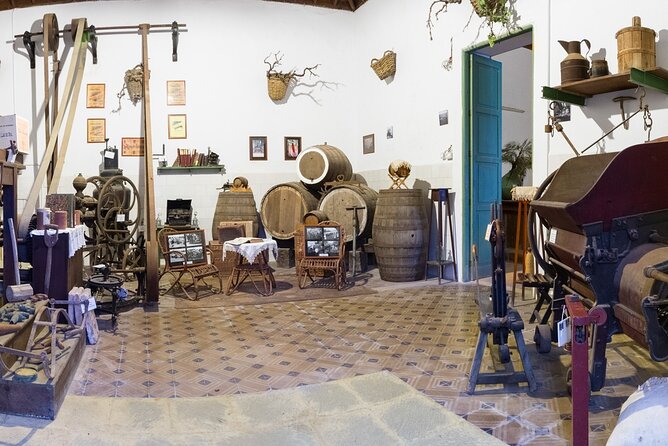
Inside, the museum shows old winemaking tools and objects connected with the family’s work. It is a small museum, so you should set your expectations correctly. This is a focused collection tied to one winery, not a major national institution.
That smaller scale is part of its appeal. The tools are not presented as anonymous antiques. They fit into the family story you hear at the start. You get a sense of how wine was made in earlier generations and how much manual work went into the process.
The museum may be less satisfying if you prefer sleek displays, interactive technology, or a large collection with extensive labels. One critical assessment described the museum as old-fashioned and not especially distinctive. That is a fair caution. The visit works best if you care about the connection between the objects and the family, rather than expecting a major museum in its own right.
I would treat the museum as a short but useful stop. Its job is to give context to the cellar and the modern facilities that follow. The old tools show where the winery came from. The newer equipment shows how the family has adapted without abandoning its identity.
The centuries-old cellar and modern production rooms
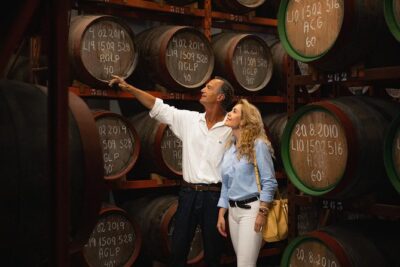
The cellar is one of the more atmospheric parts of the visit. The smell of oak and aging wine gives the space a strong sense of place, and the age of the room reinforces the family’s long connection with winemaking.
You can compare this traditional cellar with the modern facilities used today. That contrast helps explain that tradition does not mean refusing change. A family winery can protect old methods and memories while still using newer equipment and ideas where they make sense.
The tour’s explanations are an important part of this stop. Past visitors have particularly praised the guide’s ability to explain the winery’s operation and family background in an engaging way. Maria is named several times as a warm, entertaining, and professional guide. Since the guide can vary by date, I would not assume Maria will lead every visit, but her role gives you a useful sense of the tone to expect.
The commentary is available in English. One account also notes guidance in both English and Spanish, but English is the clearly stated language for booking. If you want a very technical wine lesson, ask questions as you go. The information appears to focus on the winery’s story, production, and local character rather than formal wine certification.
Same island, a completely different sort of day:
- Poema del Mar Skip-the-Line Ticket
★ 4.8 · 3,856 reviews - Puerto de Mogán: Submarine Tour
★ 4.4 · 3,792 reviews - Maspalomas: Guided Camel Ride in the Maspalomas Sand Dunes
★ 4.4 · 3,690 reviews - Guided tour of the Banana World
★ 5.0 · 3,431 reviews
Two wines, cheese, and toasted bread
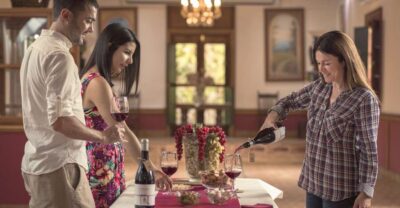
The tasting closes the visit. You sample two local wines with Gran Canarian cheese and toasted bread. This is a modest menu, but it is well suited to a 90-minute introduction.
The food pairing matters because it turns the tasting into a small local meal. Cheese and bread give you something to eat while you compare the wines, and they help keep the activity relaxed rather than overly formal. The emphasis is on local products, not on a long tasting flight or a full lunch.
You should also know what is not included in the stated tasting. The sample menu lists wine tasting, and the supplied details specify two wines, bread, and cheese. Do not book this expecting a large meal, multiple courses, or a wide selection of bottles.
The strongest praise centers on the quality of the wine and cheese, with several people describing both as a highlight. One visit also included the chance to try a moisturizing cream, and another person bought cheese, honey, and wine to take home. Those extras may not be guaranteed as part of every standard visit, so consider them possible additions rather than promised inclusions.
A good way to approach the tasting is to let the guide explain the wines first, then try each with the cheese and bread. You do not need advanced wine knowledge. The point is to notice the character of local products and connect them with the place you have just walked through.
How the 90-minute schedule works
The experience is planned as one continuous visit lasting about an hour and a half. It begins at the winery, moves through the family story and vineyards, continues into the museum and cellar, and finishes in the tasting area.
That length is one of the tour’s strengths. You get enough time to see several parts of the property without giving up a whole day of your holiday. It fits neatly into an afternoon, especially if you are staying in Las Palmas and want a countryside outing without committing to a larger excursion.
The timing also means the pace should remain fairly gentle. You are not trying to cover several wineries or travel between scattered stops. The activity ends back at the same meeting point, which keeps the plan simple.
The tradeoff is that each section receives only a limited amount of time. If you want a very long vineyard walk, a detailed production seminar, or several hours of leisurely tasting, this will feel brief. If you want a well-shaped introduction to Canarian wine culture, 90 minutes is more practical.
Getting there from Las Palmas
The winery is in Santa Brígida, not central Las Palmas. The meeting point is specific, so check the address carefully before setting out.
Public transport is possible, but one account describes the bus journey from Las Palmas as taking a little over an hour. That may be fine if you enjoy moving at a slower pace and have plenty of time. It is less appealing if you are trying to fit the winery between other fixed plans.
A taxi can be a more convenient option. One person without a car reported taking a taxi from Las Palmas at a reasonable price. Since the tour itself costs $34.75 per person, transport can affect the total value, especially for solo visitors or couples. A group sharing a taxi may find the outing easier to justify than someone paying for a private ride alone.
The activity does not include transportation from Las Palmas. Build in enough time to reach Santa Brígida and return. You also need to arrive at the stated meeting point rather than expecting a hotel pickup.
Is $34.75 a fair price?
At $34.75 per person, the price is reasonable if you value the full visit rather than the two drinks alone. You are paying for access to a working family property, the vineyard walk, the museum, the cellar, the modern facilities, the guide’s explanation, and a tasting with local food.
It would be poor value if you only want a quick glass of wine. Two wines with bread and cheese do not make this a large tasting event. The price makes more sense for someone who wants background, scenery, and a personal connection with the winery.
The group limit of 20 helps protect the visit from becoming too crowded. It is not a private tour, but the maximum is far smaller than a large coach group. That should make it easier to hear the guide and ask questions.
I also like the fact that the activity can serve several types of visitors. Couples can treat it as a calm afternoon outing. Food-minded visitors get local cheese and wine. Families can bring children, who have fruit juice available. People staying in Las Palmas can use it as an inland break, provided they plan the transport.
What the strong praise gets right
The most consistent strengths are the guide, the property, the family story, and the wine-and-cheese finish. The guide is repeatedly described as friendly, entertaining, professional, and well informed. Maria receives special praise for making the visit more engaging.
The grounds also receive strong attention. The winery is described as a lovely country house with gardens and vineyards in good condition. That tells you the setting is part of the value, not just a backdrop between indoor stops.
The family history gives the tour its emotional center. You see how the operation was maintained across generations, then compare older tools and cellar traditions with present-day production. This creates a clear arc that many short tastings lack.
The wine itself is another major strength. Several visits describe it as excellent or very good, and the cheese board receives similar praise. I would not assume you will love every bottle, since taste is personal, but the format gives you a fair chance to discover a local style.
The one criticism worth taking seriously
Not every visitor will find the museum or the overall visit special. One negative assessment called the museum old-fashioned and felt the experience added little to a holiday. The response from the provider defended the winery’s history and the quality of the wine, but the criticism still points to a useful booking question.
Ask yourself what you want from a winery tour. If you want polished architecture, dramatic cellar design, a large museum, or an extensive tasting list, this small family property may feel limited. If you enjoy personal stories, older tools, traditional rooms, and a quieter setting, those same features may be exactly what you want.
The tour’s appeal depends heavily on the guide. Good explanations bring the photographs, cellar, and equipment to life. Without that connection, the museum could seem simple. Fortunately, the repeated praise for the guiding suggests that the human element is usually a strong part of the visit.
Who should book this winery visit?
I would recommend it to you if you want an easy introduction to Gran Canaria’s wine culture and prefer a family-run setting to a large attraction. It is also a good choice for a free afternoon, a food-focused itinerary, or a break from coastal sightseeing.
Families can consider it because children are allowed and fruit juice is available. The 90-minute length is more manageable than a full-day wine route, though adults should remember that the main activity is still a wine tasting.
You should also consider it if you are staying in Las Palmas without a car. A taxi may simplify the outing, while the bus takes more time. Check the transport plan before booking so the journey does not overshadow the visit.
I would skip it if your main goal is a long, advanced tasting or a major museum. This is a personal, compact experience built around place, people, and two wines, not a broad survey of every wine made in the Canary Islands.
Booking is flexible because free cancellation is available up to 24 hours before the start time. The activity is often reserved about three weeks ahead, so planning around 21 days in advance is sensible if your dates are fixed.
FAQ
Where does the winery tour begin?
It begins at Ctra. Bandama, 68, 35310 Santa Brígida, Las Palmas, Spain. The activity ends back at the same meeting point.
How long does the experience last?
The tour lasts approximately 1 hour and 30 minutes.
How many wines are included?
The tasting includes two local wines, served with Gran Canarian cheese and toasted bread.
Is the tour offered in English?
Yes. English is one of the offered languages.
Can children participate?
Yes. Most people can participate, and fruit juice is available for children.
What is the cancellation policy?
You can cancel at least 24 hours before the start time for a full refund. Cancellations or changes made less than 24 hours before the activity are not accepted for a refund.
Should you book it?
Book this winery visit if you want a small-scale, family-led look at Gran Canaria’s wine traditions, with a countryside setting and a simple local tasting. The family photographs, old tools, cellar, organic vineyards, and modern facilities give the 90 minutes a clear sense of purpose.
Before you commit, plan the journey from Las Palmas and remember that the museum is modest rather than grand. With those expectations in place, the $34.75 price offers a pleasant way to meet the island through its wine, cheese, family stories, and volcanic soil.
Just added around Gran Canaria
- Las Palmas Maspalomas Gran Canaria Salsa Lovers Dance Experience★ 5.0 · 3 reviews
- Escape room “The gratest show on earth” at Holidayworld★ 3.9 · 3 reviews
- Gran Canaria: tasting wine & local cheese★ 4.7 · 3 reviews
- Parasail in Taurito Mogán or Playa del Inglés★ 4.5 · 3 reviews
- Photoshooting at Roque Nublo, Tejeda★ 5.0 · 3 reviews
- Gran Canaria Private Transfer from Puerto Rico to Las Palmas (LPA) airport★ 4.5 · 3 reviews
- Gastronomic Bike Tour through Las Palmas at Night★ 5.0 · 3 reviews
- E-Bike Family Tour : Sightseeing in Playa Ingles,Maspalomas Dunes★ 5.0 · 3 reviews
Gran Canaria Wine Tastings, compared.
Banana Museum, Rum Distillery & Winery with Tasting: Premium tour
Read our review →
1h Boat Trip + 2h Dockside Local Wine & Food Tasting
Read our review →

Gran Canaria Premium Tour: Volcanoes and Wine for cruisers
Read our review →Browse the lists this tour appears in